

MILITARY ∙ MEDICAL ∙ AEROSPACE ∙ ELECTRONICS ∙ SEMICONDUCTOR ∙ CONSTRUCTION
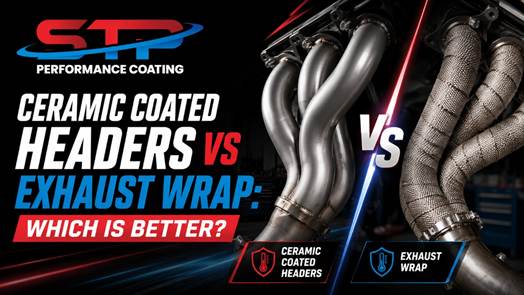
Heat around an engine bay can affect wiring, hoses, starters, intake temperatures and driver comfort. Two common ways to manage that heat are ceramic coating and exhaust wrap. Both aim to keep more heat within the exhaust system, but they do not protect the metal or age in the same way.
The better choice depends on the vehicle, the header material, its intended use and whether appearance and corrosion protection matter.
How Exhaust Wrap Controls Heat
Exhaust wrap is wound around header tubes or exhaust pipe to create an insulating layer. It can be installed at home, making it attractive for race cars, motorcycles and tight engine bays.
Correct installation matters. The wrap needs consistent overlap and secure fasteners. Oil contamination, frayed sections or loose material should be addressed rather than ignored.
Before wrapping a new header, check the manufacturer’s instructions and warranty. Some header manufacturers warn that wrap can retain moisture or raise metal temperatures enough to contribute to rust, pitting or fatigue. A product that works in one competition application may not suit a street vehicle exposed to rain and repeated heat cycles.
How Ceramic Header Coating Is Different
A professional ceramic coating bonds directly to prepared metal. Performance Coatings cleans and blasts exhaust parts, then applies coating to the internal and external surfaces where the part allows it.
The coating forms a thermal barrier without covering the header beneath fabric. It can reduce radiated heat while also protecting the metal from oxidation and corrosive exhaust gases. That internal protection matters because a header may deteriorate from the inside while the visible surface still looks serviceable.
Performance Coatings offers Chromex for temperatures up to 1300 degrees Fahrenheit and satin finishes rated above 2000 degrees Fahrenheit. The correct finish should be chosen for the expected exhaust temperature rather than appearance alone.
Consider Moisture and Corrosion
Wrapped headers can be harder to inspect. Water, road spray or condensation may remain beneath the material, particularly on a vehicle stored outside or driven in wet conditions. Stainless steel resists corrosion better than ordinary steel, but it is not immune to heat fatigue or contamination.
Ceramic coating leaves the shape of the header visible. Cracks, impact damage and failed welds are easier to notice during routine inspection. The coating also provides a corrosion inhibiting surface rather than relying only on insulation.
No finish eliminates the need to fix exhaust leaks or inspect mounting points. A cracked header should be repaired before coating.
Appearance and Maintenance Matter Too
Wrap has a purposeful competition look, although it can fade, stain or fray. Cleaning it is not always straightforward once fluids have soaked into the fibers.
Ceramic coating creates a finished surface that is easier to wipe down. Polished Chromex offers a bright metallic appearance, while satin colors suit stock restorations, turbo systems, motorcycles and darker builds.
The part must be fully disassembled before arriving at Performance Coatings. Grease, heavy mud and oil should be removed, and attached sensors or hardware should come off. The shop does not disassemble or reassemble customer parts.
Which Option Fits Your Vehicle?
Wrap may be useful when a temporary, localized heat barrier is needed and the header manufacturer approves it. It can also make sense for a dedicated competition vehicle that is inspected frequently.
Ceramic coating is usually the stronger long term choice when the owner wants heat management, corrosion resistance and a clean finish in one treatment. It is particularly useful for street cars, classics, marine exhaust, off road vehicles, motorcycles and turbo applications where moisture and appearance remain concerns.
Engine tuning still matters. Excessively lean mixtures, ignition problems and extreme exhaust gas temperatures can damage parts regardless of the surface treatment.
Ask Performance Coatings About Your Headers
Performance Coatings Inc. has served motorsports customers from Auburn, Washington, for more than two decades. The shop coats stock manifolds, short and long tube headers, turbo parts, motorcycle exhaust and many other components, with standard work generally completed within five to seven working days after the parts arrive. Call 253 735 1919 to discuss the material, expected temperature and finish for your project.
References
https://www.performancecoatings.com/exhaust-coating
https://www.performancecoatings.com/customer-data
https://www.performancecoatings.com/prices
https://www.holley.com/support/exhaust/
https://www.jet-hot.com/articles/2023/11/21/why-exhaust-wraps-are-a-bad-idea
https://swaintech.com/race-coatings/race-coating-descriptions/white-lightning-exhaust-coatings/